

google-cloudGoogle Associate Cloud Engineer: A Hands-On Preparation Guide
Prepare for the Google Associate Cloud Engineer exam with hands-on practice across compute, storage, networking, IAM, and the command line, plus a study plan.
AWS, Azure, Cisco, CompTIA, cybersecurity, and cloud platforms. Expert guides that cut through the noise and tell you exactly what to study.
IT certifications are professional credentials that validate your expertise in specific technologies, platforms, and domains. Whether you are targeting cloud platforms like AWS, Azure, and Google Cloud, networking credentials like Cisco CCNA and CCNP, or security certifications like CompTIA Security+ and CISSP, the right certification can accelerate your career and increase your earning potential significantly.
This collection covers the full spectrum of IT certifications: entry-level credentials for those just starting out, associate and professional level exams for experienced practitioners, and expert-level certifications for senior specialists. Each guide is written by practitioners who have sat and passed these exams.
What you will find: In-depth exam breakdowns, study roadmaps, recommended resources, practice question strategies, and tips from certified professionals on what actually matters on exam day.
AWS cloud certifications from Cloud Practitioner to Specialty tracks
23 articlesMicrosoft Azure certifications from AZ-900 to AZ-305 and beyond
20 articlesCisco networking certifications from CCNA to CCIE
10 articlesCitrix certifications including XenDesktop, XenApp, NetScaler and the current Virtual Apps and Desktops tracks
3 articlesVendor-neutral CompTIA certifications including A+, Network+, Security+, and more
23 articlesSecurity certifications including CISSP, CEH, OSCP, and CISM
23 articlesCKA, CKAD, CKS, and vendor DevOps certifications
15 articlesProven strategies for passing any IT certification exam
46 articlesGCP certifications from Associate Cloud Engineer to Professional tracks
13 articlesHP ExpertONE and HPE certifications including retired ASE, ATP, and sales credentials
10 articlesIBM certifications including Power Systems, PureFlex, storage, DataStage, Maximo and Tivoli credentials
12 articlesITIL 4 Foundation and IT service management certifications
10 articlesMicrosoft certifications across Azure, Microsoft 365, Dynamics 365, and Power Platform
10 articlesOracle certifications including WebLogic, Oracle Linux, Java, and business intelligence credentials
5 articlesPMP, CAPM, PMI-ACP, and other PMI project management certifications
11 articlesSAP certifications including ABAP, Financial Accounting and Procurement credentials, and the move to SAP S/4HANA
3 articlesNetApp certifications including NCDA, Data ONTAP 7-Mode and Clustered ONTAP credentials
2 articlesSalesforce Administrator, Developer, Architect, and Consultant credentials
10 articlesRetired certifications from CIW, SAS, EMC, Riverbed and other vendors whose programmes were renamed, acquired or discontinued
6 articlesVMware and Broadcom certifications including VCP, Cloud Foundation, and retired vSphere credentials
4 articlesPrepare for the Google Associate Cloud Engineer exam with hands-on practice across compute, storage, networking, IAM, and the command line, plus a study plan.

A practical guide to building an IT certification study plan that survives a busy life, using exam objectives, active recall, and a realistic schedule.

Understand how certification exams use scaled scores, why the passing number is not a percentage, and how to set realistic practice test targets to pass.

E20-002 was an exam in EMC's Information Storage Associate family. Why the vendor-neutral ISM curriculum aged unusually well.

A00-211 was SAS Base Programming for SAS 9, superseded by the performance-based A00-231 where candidates write and run actual code.

201-01 was an exam in Riverbed's professional-tier RCSP family. Riverbed's original certification pages are gone.

1D0-635 was CIW's JavaScript Specialist exam, superseded by 1D0-735 JavaScript Specialist v3.

Unlike most codes in this series, 1D0-61A is not retired. Per CIW's own site it is 30 questions, 30 minutes, 66.66 percent to pass, valid three years.

199-01 was the RCSP-W exam covering Riverbed SteelHead WAN optimization. The real story is the category: cheap bandwidth.
C2010-590 was IBM Tivoli Storage Manager V6.3 Implementation: 105 minutes, 65 questions, 64 percent to pass.
C2010-570 was IBM Maximo Asset Management V7.5 Implementation: 105 minutes, 66 questions, 69 percent to pass.
C2010-501 was the Maximo infrastructure exam: 90 minutes, 57 questions, and a 71 percent passing score, the highest of the Maximo family.

NS0-156 was the first NCDA exam for Clustered Data ONTAP, released in 2013. Why the clustered architecture beat 7-Mode.
NS0-155 was the last NCDA exam for Data ONTAP 7-Mode, an architecture NetApp subsequently end-of-lifed.

C_TSCM52_66 was SAP's Certified Application Associate exam for Procurement with SAP ERP 6.0 EhP6, covering the Materials Management module.

C_TFIN52_65 was SAP's Certified Application Associate exam for Financial Accounting with SAP ERP 6.0 EhP5.

C_TAW12_731 was SAP's Certified Development Associate exam for ABAP with NetWeaver 7.31.

1Y0-350 covered NetScaler as a general-purpose application delivery controller: load balancing, SSL offload, content switching and traffic management.
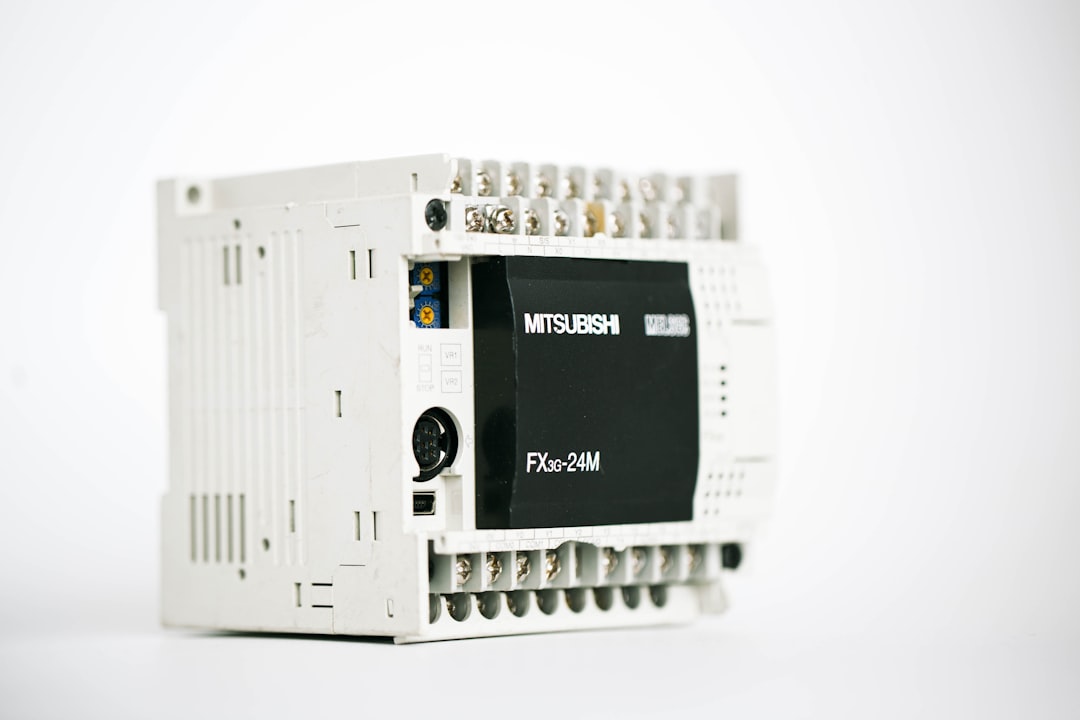
1Y0-250 covered NetScaler in its role supporting XenApp and XenDesktop, focused on secure remote access through NetScaler Gateway.

1Y0-200 was the associate-level Citrix virtualization exam leading to CCA-V. Citrix credentials carried a three-year validity.

1Z0-899 was Oracle's Java EE 6 Web Component Developer exam, covering servlets, JSP and the server-side web tier.

1Z0-804 was the second exam in Oracle's Java SE 7 professional path, pairing with 1Z0-803 to produce the OCP Java SE 7 Programmer credential.

1Z0-591 was Oracle Business Intelligence (OBI) Foundation Suite 11g Essentials: 120 minutes, 63 percent passing score, 245 US dollars, per Oracle's own data.

1Z0-460 was Oracle Linux 6 Implementation Essentials, confirmed by Oracle's own exam URL.

1Z0-102 was Oracle WebLogic Server 11g: System Administration I, the associate-level exam in the WebLogic administration track.
C4120-783 was IBM PureFlex Technical Support V2: 75 minutes, 45 questions, 66 percent to pass.
C4120-782 was IBM PureFlex Systems Sales V2: 90 minutes, 50 questions, 66 percent to pass.
C4090-456 was IBM XIV Storage System Technical Solutions V4: 105 minutes, 70 questions, 65 percent to pass.
C4090-455 was High Volume Storage Fundamentals V3: 105 minutes, 73 questions, 68 percent to pass, the most demanding of IBM's storage exams.

C4090-450 was Midrange Storage Sales V1: 90 minutes, 60 questions, 65 percent to pass.
C4040-124 was the IBM i branch of IBM's Power Systems sales track: 60 minutes, 44 questions, and a 70 percent passing score, the highest in the family.
C4040-123 was the AIX and Linux branch of IBM's Power Systems sales track: 60 minutes, 42 questions, 61 percent to pass.
C4040-122 was the shared core exam in IBM's Power Systems sales track: 75 minutes, 52 questions, 63 percent to pass, counting toward three credentials.
C2090-303 was IBM InfoSphere DataStage v9.1: 90 minutes, 67 questions, 59 percent to pass, leading to IBM Certified Solution Developer.

HP2-K37 was a web-based sales exam in HP's ExpertONE program. Its documentation was not preserved, but its HP2-K siblings identify it as storage sales.

HP2-E58 was a web-based sales exam in HP's ExpertONE program. Its documentation was not preserved.

HP2-B109 was a web-based sales exam in HP's ExpertONE program. Its documentation was not preserved.

HP0-Y32 was Designing & Troubleshooting Open Standards Networks, an exam within HP ASE - Network Infrastructure V11.

HP0-S36 was Architecting HP Server Solutions, leading to HP ASE - Server Solutions Architect V8.

HP0-S34 was Implementing HP Rack and Tower Server Solutions, the required exam for HP ATP - Rack and Tower Server Solutions V8.1.

HP0-J73 was Foundations of HP Storage Solutions, the single required exam for HP ATP - Storage Solutions V1, covering HP 3PAR StoreServ.

HP0-J67 was Architecting Multi-site HP Storage Solutions, an exam within HP Master ASE - Storage Solutions Architect V1.

HP2-Z30 was HP FlexNetwork Fundamentals, a retired networking exam built as an upgrade path for engineers already certified by Cisco, Juniper or 3Com.

HP2-K38 was Selling HP Enterprise Storage Solutions and Services, a retired web-based sales exam in HP's ExpertONE program: 40 questions, 60 percent pass mark.

VCPVCD510 was not a separate vCloud Director certification: it was the shorter of two exam routes to VCP-Cloud, open only to existing VCP5-DCV holders.

VCPC510 was the longer of two routes to VCP-Cloud, covering vSphere infrastructure as well as vCloud Director for candidates without a VCP-DV prerequisite.

VCPN610 earned the original VCP-NV and retired on 30 November 2015, but unlike VCP550 the network virtualization track continued through VCP-NV 2024.

The VCP550 exam and VCP5-DCV certification retired March 31, 2017, and the VCP6-DCV replacement retired in 2019.

CKAD exam time management: Master CKAD time management with a task triage strategy, kubectl speed techniques, efficient docs use.

Master the incident response lifecycle phases tested on security certifications. Learn the correct order, exam traps, and how to reason through IR scenarios.
For most people starting out, CompTIA A+ or CompTIA Network+ are the best entry-level choices because they are vendor-neutral and widely recognized. If you already have some experience, consider CompTIA Security+ for cybersecurity or AWS Cloud Practitioner for cloud. The right first certification depends on your career goal: helpdesk and sysadmin roles benefit from CompTIA, cloud engineering from AWS or Azure fundamentals, and networking from Cisco CCNA.
Preparation time varies by certification level and your prior experience. Entry-level certifications like CompTIA A+ or AWS Cloud Practitioner typically require 4-8 weeks of dedicated study. Associate-level exams like Cisco CCNA or AWS Solutions Architect Associate need 2-4 months. Professional and expert-level certifications such as CCIE or AWS Solutions Architect Professional can require 6-12 months. Consistent daily study of 1-2 hours is more effective than cramming.
Yes, IT certifications continue to deliver strong ROI in 2025. Cloud certifications (AWS, Azure, GCP) and cybersecurity certifications (CISSP, CompTIA Security+, CEH) command significant salary premiums. Studies consistently show certified professionals earn 10-25% more than non-certified peers in the same roles. Certifications are especially valuable for career changers, recent graduates, and professionals seeking promotions into specialized roles.
Choose based on where your target employers use. AWS has the largest market share (roughly 31%) and the most job postings, making it the safest general choice. Azure dominates enterprise and Microsoft-heavy environments, making it ideal if you target large corporations or government. Google Cloud is smaller but growing fast in data engineering and machine learning. If unsure, start with AWS Cloud Practitioner as a foundation, then specialize based on job market demand in your target region.
Most major IT certifications expire after 2-3 years. CompTIA certifications are valid for 3 years and can be renewed through continuing education credits (CEUs) or by passing a higher-level exam. Cisco certifications expire every 3 years and require passing any Cisco professional or specialist exam. AWS certifications expire after 3 years and require passing the same or a higher-level exam. CISSP requires 120 CPE credits over 3 years plus an annual maintenance fee.
The most effective approach combines: official study guides or courses as your primary resource, practice exams to identify weak areas (aim for 85%+ on practice tests before sitting the real exam), hands-on labs to reinforce concepts, spaced repetition with flashcards for terminology and facts, and active recall rather than passive re-reading. For technical certifications, hands-on practice in a lab environment or cloud sandbox is critical.
The highest-paying certifications consistently include: CISSP with average salaries above $120,000, AWS Solutions Architect Professional and DevOps Engineer, Google Professional Cloud Architect, CCIE (Cisco Certified Internetwork Expert), PMP in tech roles, and Certified Kubernetes Administrator (CKA). Salary depends heavily on location, experience, and industry, but these certifications signal deep expertise that commands premium compensation.